Taunton Motors
Choosing China’s best Precision Gear Motor supplier requires more than comparing unit prices. Buyers need verified torque data, repeatable backlash control, thermal performance, and dependable export support. A motor may look identical on a specification sheet, yet perform differently after continuous operation.
Industry forecasts show why this decision matters. Fortune Business Insights estimates the global gear motor market could grow from about USD 27.15 billion in 2023 to USD 39.73 billion by 2030. MarketsandMarkets also identifies automation, robotics, and material handling as major demand drivers. These figures indicate expanding opportunity, but market reports use different definitions and assumptions. Their numbers should guide research, not replace it.
“Precision is not a product; it is a process,” says Dr. Manfred Wittenstein, a recognized pioneer in precision drive technology. His observation remains practical on a factory floor. It points buyers toward process evidence, including gear inspection records, winding tests, noise measurements, and batch traceability. Leading Chinese suppliers increasingly combine CNC machining, automated assembly, and final-load testing. Some also provide IEC documentation, customized shaft designs, and technical support across multiple time zones.
Still, “best” is not universal. A compact planetary motor may suit a robotic joint, while a worm gear motor may better serve a conveyor. Buyers should request samples, define duty cycles, and verify performance under real loads. Certifications help, but they do not guarantee every production batch. The strongest supplier is the one that proves consistency, communicates clearly, and accepts technical scrutiny before the purchase order.
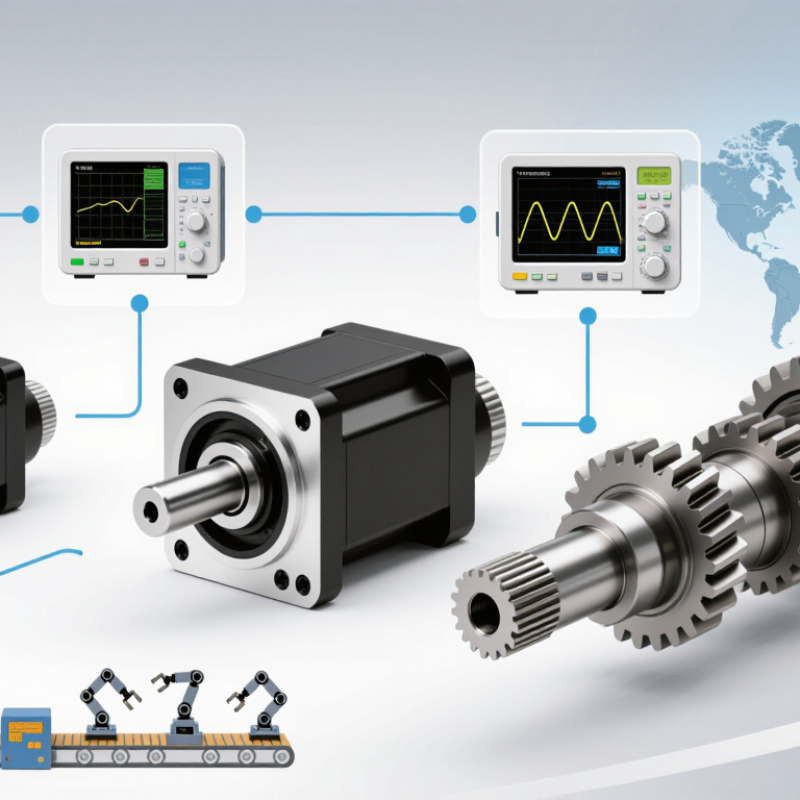
A precision gear motor combines an electric motor with a gearbox for controlled speed and torque. Precision means more than compact size. It includes low backlash, stable output, repeatable positioning, and reliable thermal performance. In a packaging machine, the shaft may stop within a narrow tolerance. Small errors can create rejected products, vibration, or premature wear. The right supplier understands these practical effects, not only catalog figures.
For global buyers, supplier choice directly affects motion quality and production stability. A qualified China-based supplier should explain torque-speed curves, reduction ratios, voltage options, noise levels, and expected service life. Request sample units and test them under the real load. Check startup current, operating temperature, shaft play, and performance after repeated cycles. Ask for inspection records and traceable quality data. Paperwork alone is not proof.
A common sourcing mistake is trusting peak torque without studying continuous torque. That number can mislead. A responsible supplier discusses limits openly and suggests suitable safety margins. Clear communication also matters when drawings, connectors, or mounting dimensions change. I once treated a neat specification sheet as enough; it was not. Actual testing revealed a small alignment issue. That experience still shapes my supplier reviews. No supplier gets every selection right, but a dependable partner responds quickly, corrects details, and supports long-term engineering decisions.
This engineering reference compares output speed and theoretical output torque at common gear ratios. The calculation assumes a 3,000 rpm motor speed, 100 W input power, and 85% gearbox efficiency. Output speed is calculated as motor speed divided by gear ratio, while torque is calculated using T = 9550 × P(kW) ÷ speed(rpm). Actual performance depends on gearbox design, load, lubrication, backlash, thermal conditions, and supplier quality control.
Evaluating China’s precision gear motor capability requires more than comparing unit prices. Start with process evidence: gear-cutting accuracy, heat-treatment control, bearing fit, and final backlash measurements. Ask for inspection records linked to batch numbers, not selected samples. ISO 1328 gear accuracy grades can clarify manufacturing precision, while ISO 9001 certification indicates process discipline, not guaranteed product performance.
Automation is useful, but it is not proof of quality. The International Federation of Robotics reported 276,288 industrial robot installations in China during 2023, representing about 51% of global installations. This shows strong manufacturing infrastructure, yet gear motor buyers still need application-specific evidence.
Request torque-speed curves, efficiency results, noise readings, thermal-rise tests, and endurance data under realistic loads. IEC 60034 test methods can help standardize motor comparisons. Ask for raw data.
Supplier evaluation should also examine materials and repeatability. Confirm steel grades, magnet specifications, lubricant selection, and supplier traceability. A capable factory should explain how it controls eccentricity, gear mesh, sealing, and shaft runout. Production capacity matters, but stable capability matters more than impressive monthly figures. The IEA has reported that motor-driven systems consume roughly half of global electricity, making efficiency and service life commercially significant. A small efficiency loss can become expensive in continuous operation.
A polished factory tour can still mislead. I would require pilot samples, dimensional reports, and independent verification before approving mass production. No supplier is perfect; the real test is whether engineers disclose process limits and correct failures transparently.
A high-quality precision gear motor begins with a clear match between load and operating conditions. Rated torque should exceed the application’s continuous demand, while peak torque covers startup and sudden resistance. Output speed must remain stable under load, not only during no-load testing. Gear ratio, motor voltage, current, and duty cycle should be listed together. Otherwise, comparison becomes unreliable.
Backlash is critical in positioning equipment. A low value, measured in arc minutes, improves repeatability at the output shaft. Radial and axial load ratings also matter when the motor drives a belt, screw, or compact gearbox. Check efficiency across the working speed range. A motor that reaches high efficiency only at one point may produce unnecessary heat in daily operation. Noise below a stated decibel level is useful, but the measurement distance and test conditions should be disclosed.
In practical inspections, shaft runout, bearing play, insulation resistance, and temperature rise reveal more than polished photographs. Protection ratings, connector quality, and housing materials affect service life in dusty or humid environments. Certification documents and traceable test records strengthen supplier reliability. A perfect specification sheet is not enough. I have seen motors pass short bench tests yet lose accuracy after repeated reversals. That weakness deserves honest discussion. Engineers should request endurance data, sampled inspection results, and tolerances for every critical dimension. Small omissions can become large installation problems.
| Technical Dimension | Typical Industrial Range | High-Quality Selection Indicator | Why It Matters to Global Buyers | Recommended Verification Method |
|---|---|---|---|---|
| Gear Type | Planetary, helical, worm, bevel, or harmonic gearing | Gear architecture is matched to required precision, torque, efficiency, space, and self-locking needs | The gear type directly affects performance, service life, cost, and application suitability | Review the technical drawing, gear arrangement, application load profile, and duty cycle |
| Rated Output Torque | Approximately 0.1 to over 10,000 N·m, depending on frame size and gear design | Rated torque exceeds the application’s continuous requirement, with an appropriate service factor for peak loads | Prevents overheating, premature tooth wear, and unexpected shutdowns | Compare the manufacturer’s continuous and peak torque curves with the machine load cycle |
| Reduction Ratio | Commonly 3:1 to 300:1 per stage or product family; higher ratios may require multiple stages | Ratio tolerance and output speed remain within the stated specification under rated load | Correct ratio determines output speed, torque multiplication, and positioning performance | Check no-load and rated-load output speed using a calibrated tachometer |
| Backlash | Approximately 3–30 arcmin for many precision planetary or helical gear motors; lower values are available in specialized designs | Low and repeatable backlash at the specified measurement torque and operating position | Low backlash improves positioning accuracy, repeatability, and motion stability | Measure angular play with a rotary encoder or torque-and-angle test fixture |
| Transmission Efficiency | Approximately 60–98%, depending on gear type, ratio, lubrication, load, and number of stages | Efficiency is documented at defined speed, torque, temperature, and lubrication conditions | Higher efficiency reduces energy consumption and heat generation | Calculate output power divided by input power under representative operating conditions |
| Speed Regulation | Varies with motor type and controller; closed-loop systems generally provide better regulation than open-loop systems | The supplier specifies speed tolerance across voltage, load, and temperature changes | Stable speed supports consistent throughput and process quality | Test speed at minimum, nominal, and maximum load conditions |
| Radial and Axial Load Capacity | Application-specific; commonly expressed in newtons at a defined distance from the gearbox face | Published load ratings include direction, distance, speed, duty cycle, and expected service life | Adequate load capacity protects gears, bearings, shafts, and mounting interfaces | Compare calculated belt, chain, pulley, or screw loads with the product load chart |
| Motor Rated Voltage | Common DC ratings include 12, 24, and 48 V; AC versions may use regional industrial voltages | Voltage, current, insulation system, and controller compatibility are clearly documented | Ensures electrical compatibility across different international markets | Review nameplate data, wiring diagrams, and test the motor with the intended controller |
| Insulation and Electrical Protection | Insulation class and protection level depend on motor construction and target market requirements | Insulation resistance, dielectric strength, grounding, and protection specifications are traceable | Reduces electrical failure risk and supports regulatory compliance | Request routine test records and verify applicable electrical safety requirements |
| Ingress Protection | Common ratings range from IP40 for protected indoor use to IP65 or higher for dust and water exposure | The IP rating is tested for the complete motor and gearbox assembly, including connectors and seals | Protects internal components in dusty, humid, or washdown environments | Confirm the test basis and inspect sealing at shafts, cable exits, and housing joints |
| Noise and Vibration | Highly dependent on speed, gear geometry, housing, bearings, and assembly quality | Noise and vibration limits are stated with measurement distance, speed, load, and mounting conditions | Low vibration improves user comfort, product life, and machine precision | Use a sound-level meter and vibration analyzer under standardized test conditions |
| Operating Temperature | Many industrial assemblies are designed for approximately −20°C to +60°C ambient operation, subject to product design | Temperature limits include derating information, lubrication limits, and allowable winding or housing temperature | Prevents lubricant breakdown, insulation aging, and torque loss | Conduct a thermal test at rated load until temperatures stabilize |
| Service Life and Duty Cycle | Common duty classifications include intermittent operation and continuous operation; calculated life varies with load and speed | Expected gear and bearing life is calculated using clearly defined load, speed, lubrication, and duty assumptions | Supports reliable production planning and total-cost evaluation | Request life calculations, duty-cycle definitions, and endurance-test results where available |
| Materials and Manufacturing Accuracy | Typical components use hardened alloy steel gears, aluminum or steel housings, and precision-machined shafts | Gear hardness, tooth accuracy, shaft runout, bearing fit, and dimensional tolerances are controlled and recorded | Consistent manufacturing accuracy improves efficiency, backlash, noise, and durability | Review material certificates, dimensional inspection reports, and gear-quality documentation |
| Quality Control and Traceability | Process controls normally cover incoming materials, machining, assembly, lubrication, and final testing | Each batch or unit can be linked to inspection records, test results, and production parameters | Improves consistency, warranty support, and root-cause analysis | Request sample inspection reports, serial traceability, and acceptance-test procedures |
Note: The ranges shown are general engineering references rather than universal product limits. Actual performance depends on gear design, motor type, ratio, load, speed, lubrication, mounting, ambient conditions, and testing method.
A reliable gear motor supplier should provide measurable evidence, not attractive promises. Request material certificates, process flowcharts, and inspection standards for gears, shafts, bearings, and housings. Check whether certificates match the actual factory and product scope. A certificate without traceable details proves little.
Test samples under your real conditions. Measure rated torque, speed, noise, backlash, temperature rise, and starting current. Ask for test data from several production batches, not one perfect sample. In supplier audits, review incoming inspection records and end-of-line test logs. Small gaps often reveal larger process weaknesses.
Tips: Compare samples from different dates. Verify serial-number traceability. Ask how rejected parts are isolated. Confirm compliance documents for your destination market, including applicable safety and environmental requirements. A polished factory tour is useful, but it cannot replace records or independent testing. No checklist is perfect.
Production reliability depends on controlled repetition. Review equipment maintenance schedules, worker training, calibration records, and capacity during peak orders. Ask for realistic lead times, backup plans, and written change-control procedures. Do not accept vague answers about delays. A supplier may pass a sample test yet struggle with volume consistency. That possibility deserves attention. Use a pilot order with agreed acceptance criteria before scaling.
For global buyers seeking a precision gear motor supplier in China, comparison should go beyond unit price. Ask for quotations using identical specifications, including output torque, speed, gear ratio, voltage, duty cycle, and mounting size. A cheaper motor may use lighter bearings or provide weaker testing. Request a sample and inspect noise, backlash, temperature rise, and shaft runout. Measure performance under your real load, not only at no-load speed. Small differences matter.
Cost comparison should include tooling, sample fees, packaging, freight, duties, and possible rework. Ask for a clear price basis, such as FOB or CIF, and confirm what remains outside the quote. Check production lead times and capacity during peak seasons. Stable process records can reduce hidden delays. Still, paperwork is not proof by itself. Review test reports, calibration dates, and inspection photos. When possible, arrange an independent pre-shipment inspection.
Service quality becomes visible after the purchase order. Confirm who handles engineering questions, how quickly drawings are revised, and whether replacement parts remain available. Export support should cover commercial invoices, packing lists, shipping marks, certificates, and destination requirements. Ask for a communication schedule. Weekly updates help, but only when details are accurate. In practical sourcing, buyers sometimes focus on a low quote and overlook slow responses. That choice can interrupt assembly. No supplier is perfect. Record response times, corrective actions, and delivery results beside the final price.
It combines an electric motor and gearbox for controlled speed and torque. Precision also means low backlash, stable output, and repeatable positioning. Size alone proves little.
Supplier quality affects motion accuracy, production stability, and service life. A small shaft error can cause vibration or rejected packages. Catalog figures are not enough.
Request torque-speed curves, reduction ratios, voltage options, noise readings, and expected service life. Also confirm continuous torque, peak torque, shaft play, and thermal limits. Peak torque can mislead.
Test samples under the real machine load. Measure startup current, operating temperature, noise, shaft movement, and repeated-cycle performance. Check performance after many cycles. Paperwork alone is weak evidence.
Request gear accuracy records, heat-treatment details, bearing-fit data, and final backlash measurements. Records should connect to batch numbers. Ask for raw data, not selected results.
No. Automation can improve consistency, but it does not prove application performance. Ask for thermal-rise tests, efficiency results, endurance data, and realistic load testing. Machines are not proof.
Confirm gear steel, magnet specifications, lubricant type, sealing, eccentricity, and shaft runout controls. The supplier should explain how gear mesh remains stable. Monthly capacity matters less than repeatable production.
Observe how engineers handle drawing changes, connector updates, and mounting adjustments. A dependable supplier responds quickly and corrects technical details. I once trusted a neat specification sheet. Actual testing found an alignment problem. That mistake still affects my reviews.
Choosing the best Precision Gear Motor supplier in China requires more than comparing prices. Buyers should first understand how gear motors deliver controlled speed, torque, accuracy, and efficiency in demanding applications. A capable manufacturer should demonstrate strong engineering expertise, stable production processes, modern testing equipment, and the ability to customize gear ratios, motor types, dimensions, and performance requirements. Important technical specifications include rated torque, speed range, backlash, noise, vibration, efficiency, operating life, materials, thermal performance, and dimensional consistency.
Supplier verification is equally important. Global buyers should review quality management procedures, product testing records, certifications, traceability systems, production capacity, and consistency across batches. It is also valuable to assess communication, sample development, technical support, packaging, lead times, documentation, and export experience. A reliable supplier should provide clear quotations, realistic delivery commitments, responsive after-sales service, and flexible solutions for different order volumes. By evaluating technical capability, quality reliability, total cost, and international support together, buyers can make a confident and long-term sourcing decision.
