Taunton Motors Taunton Motors

10 Tips for Choosing the Right Robotics Gear Motor

Time:2026-10-16 Author:Madeline
0%

Choosing the right Robotics Gear Motor can determine whether a machine moves smoothly or struggles under pressure. A motor may look powerful on paper, yet fail when friction, heat, and uneven loads appear together.

This guide presents ten practical tips for evaluating torque, speed, voltage, gear ratio, duty cycle, backlash, and mounting requirements. Start with the real load, not an ideal estimate. Measure the wheel diameter, moving mass, acceleration, and expected operating hours. Small errors matter. A motor rated for continuous duty may still overheat inside a sealed enclosure. Check the manufacturer’s datasheet carefully, including stall torque, rated torque, efficiency, noise, and thermal limits.

Experienced engineers also test prototypes under realistic conditions. Run the motor with the actual battery, controller, gearbox, wiring, and mechanical frame. Reality disagrees. A low-cost option can become expensive after repeated gear wear, unstable positioning, or difficult maintenance. Conversely, the largest motor is not always the best choice; excess weight can reduce battery life and increase structural stress. Some assumptions will be wrong, especially when friction changes across surfaces or payloads shift unexpectedly.

Reliable selection requires more than comparing product prices. Look for documented performance data, consistent quality control, available replacement parts, and responsive technical support. These details often reveal a supplier’s practical authority. The following tips will help readers compare Robotics Gear Motor options with clearer criteria, fewer surprises, and a stronger connection between laboratory specifications and everyday machine performance.
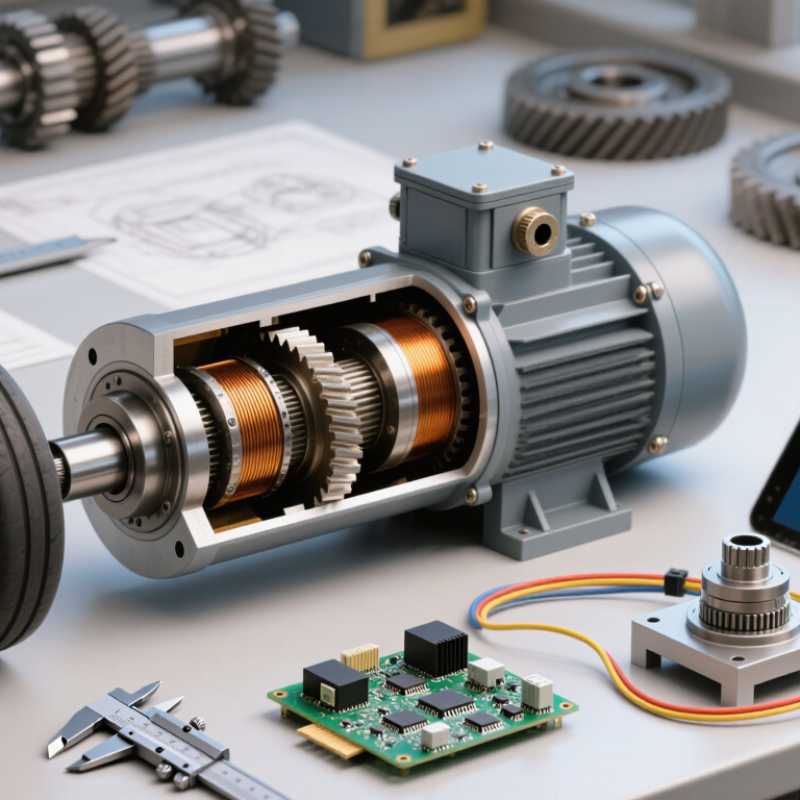
10 Tips for Choosing the Right Robotics Gear Motor

Define the Robot’s Motion and Load Requirements

Before choosing a robotics gear motor, define how the robot will move. Is it rotating a wheel, lifting an arm, or driving a belt? Record speed, acceleration, travel distance, duty cycle, and direction changes. A motor handling a 5 kg load at steady speed may fail when acceleration doubles. Measure friction and incline angles, too. Small details matter.

Calculate continuous torque, peak torque, and reflected inertia at the motor shaft. Include the gearbox, payload, wheels, and possible impact loads. The U.S. Department of Energy’s Motor Systems Market Assessment reports that motor-driven systems use about 69% of electricity in U.S. manufacturing. Efficient sizing affects both performance and operating cost. Do not select a motor from rated payload alone.

The International Federation of Robotics reported 541,302 industrial robot installations worldwide in 2023. That growth increases pressure for compact, reliable motion systems. Still, a larger motor is not automatically safer. Excess capacity can increase heat, weight, and braking demands. A practical design should verify torque through testing, then check gearbox temperature after repeated cycles. I have found that early calculations often look perfect, but real wheel slip or cable drag changes everything. Leave a realistic safety margin, but question every assumption.

Match Motor Torque, Speed, and Power to the Application

10 Tips for Choosing the Right Robotics Gear Motor

Match Motor Torque, Speed, and Power to the Application

Choosing a gear motor starts with the load, not the catalog. Measure the payload, wheel radius, incline, and acceleration time. Torque equals force multiplied by radius. Add friction and a realistic safety factor. A small mobile robot may need high starting torque, even when its running load seems modest. I have seen prototypes stall because designers calculated steady motion only. That mistake is expensive.

Speed must match the mechanism. A conveyor needing 30 revolutions per minute should not use a motor designed for 300. Gear reduction can increase torque, but it also reduces output speed and may reduce efficiency. Calculate output power from torque and angular speed. The U.S. Department of Energy reports that motor-driven systems can consume more than 70% of industrial electricity. Efficiency matters during long operating hours. Heat matters too. Check duty cycle, cooling, backlash, and gearbox life.

Industry demand reinforces this discipline. The International Federation of Robotics reported 541,302 industrial robot installations in 2023. More automation means more repeated motion and more opportunities for sizing errors. Select a motor that survives peak loads, not merely average loads. Confirm voltage, controller limits, mounting space, and shaft alignment. A spreadsheet can still lie. Test the chosen unit with the real payload, floor surface, and stopping pattern. Ten minutes of testing may reveal vibration, noise, or overheating that calculations miss.

Choosing the Right Robotics Gear Motor

Compare the typical torque, speed, and mechanical power requirements of common robotic applications before selecting a gear motor. The values below are representative engineering targets rather than brand-specific product data.

Higher torque supports heavier loads and acceleration, while higher speed improves movement rate. Mechanical power reflects the combined effect of torque and speed, so the selected motor should meet the application’s peak demand with additional allowance for friction, shock loads, and duty-cycle variation.

Select the Gear Ratio and Transmission Type

Choosing a robotics gear motor starts with the gear ratio, not the catalog speed. Estimate the wheel speed, load torque, and motor speed under real operating conditions. A higher ratio increases torque but reduces output speed. It also amplifies friction and backlash. Measure under load.

For a mobile robot, calculate the required output speed from wheel diameter and travel distance. Then select a ratio that keeps the motor away from its stalled condition. Continuous torque should exceed the measured requirement, preferably with a practical safety margin. Too much margin can add unnecessary weight and reduce battery life.

Transmission type also changes how the robot behaves. Spur gears are compact and efficient, but they can produce noticeable noise and backlash. Planetary systems usually offer better torque density and load distribution. Worm drives can hold position, yet their lower efficiency may create heat during long runs. Belt transmissions run quietly and tolerate slight alignment errors, though belts can stretch. Chain systems handle larger loads, but they need tension checks and more space.

I once chose a ratio from no-load speed alone. The prototype slowed badly on carpet. That mistake was avoidable. Test the motor with the actual wheel, battery, surface, and payload. Check reverse motion, sudden starts, and repeated stops. A gearbox that looks ideal on paper may feel weak, hot, or imprecise in the robot. Keep it practical.

Compare Motor Efficiency, Size, Control, and Compatibility

Choosing the right robotics gear motor starts with efficiency, not headline torque. The International Energy Agency estimates that electric motor systems consume about 46% of global electricity. Even a small efficiency loss can increase heat, battery drain, and maintenance needs. Compare rated efficiency at your real load, speed, duty cycle, and gearbox ratio. A motor that looks powerful on paper may waste energy at low speed.

Size matters beyond the mounting plate. Check shaft diameter, gearhead length, cable clearance, and total moving mass. A compact motor can simplify a robotic joint, but undersizing may cause vibration or premature wear. Control is equally important. Review encoder resolution, stall-current behavior, braking response, and controller compatibility. Industrial robot installations reached 541,302 units worldwide in 2023, according to the International Federation of Robotics. That growth raises expectations for repeatable motion and dependable feedback.

Compatibility deserves a physical test. Confirm voltage range, connector layout, communication protocol, thermal limits, and mounting tolerances. Use IEC motor-efficiency classifications where applicable, but do not treat laboratory ratings as field performance. Real machines accelerate, stop, and collide with resistance. They behave imperfectly. A ten-point comparison should include efficiency, torque, speed, size, weight, control, feedback, thermal capacity, mechanical fit, and service access. In bench testing, a motor may pass every calculation yet fail because its gearbox backlash is unacceptable. I would leave room for that possibility. Thin margins often look efficient until the robot starts working.

Verify Durability, Safety, Cost, and Maintenance Needs

10 Tips for Choosing the Right Robotics Gear Motor

A gear motor should survive real loads, not only catalog tests. In shop-floor trials, measure heat after repeated starts, backlash under load, and noise at operating speed. The International Federation of Robotics reported 541,302 industrial robot installations in 2023. That scale increases pressure on compact, dependable drive systems. Check the motor’s rated torque, peak torque, duty cycle, and gearbox service factor. A small safety margin matters.

Safety must be verified at the machine level. Use documented risk assessments and follow ISO 10218 for industrial robot safety. ISO 13849 also helps evaluate control-system performance. Confirm braking behavior during power loss, shaft guarding, insulation, and ingress protection. An IP rating is not a promise of unlimited protection. Dust, washdown chemicals, and cable bending can still expose weaknesses. Test the complete assembly, not only the motor.

Cost needs a wider calculation. The U.S. Department of Energy’s Industrial Motor Systems Market Assessment estimated that motor-driven systems used about 68% of industrial electricity. Efficiency affects operating cost for years. Compare purchase price, controller compatibility, replacement time, lubricant requirements, and spare-part availability. Maintenance access is easily overlooked. Leave room for inspection and connector replacement. I have seen designs fail because the motor was efficient but impossible to service. That mistake deserves a second look. A lower-cost unit may become expensive when one failed bearing stops an entire cell.

10 Tips for Choosing the Right Robotics Gear Motor - Verify Durability, Safety, Cost, and Maintenance Needs

No. Selection Area What to Verify Practical Engineering Data Why It Matters Recommended Action
1 Calculate Required Torque Check load mass, pulley or wheel radius, acceleration, incline, friction, and external forces. For a lifting load, torque can be estimated as T = m × g × r ÷ η, where g ≈ 9.81 m/s² and η is drivetrain efficiency. An undersized motor may stall, overheat, or suffer premature gear damage. Select a continuous torque rating above the calculated running torque and verify the peak torque requirement separately.
2 Allow a Service-Factor Margin Compare the application duty cycle and shock loading with the motor's rated continuous and peak performance. A common preliminary design margin is approximately 1.25–2.0 times the calculated continuous torque, with higher values for impact loads or frequent reversals. Robots often experience acceleration peaks, collisions, and changing payloads that are not represented by average load calculations. Use the manufacturer's duty and shock-load ratings rather than relying only on nominal torque.
3 Match Speed and Gear Ratio Confirm output speed, reduction ratio, acceleration time, and permissible input speed. Output speed is approximately motor speed ÷ gear ratio. A higher reduction ratio generally increases output torque but reduces speed and may increase backlash. Incorrect gearing can cause inaccurate positioning, excessive current draw, or insufficient cycle speed. Choose the ratio that meets both the required speed and torque at the controller's actual operating voltage.
4 Check Backlash and Position Accuracy Review angular backlash, torsional stiffness, repeatability, and load-direction changes. Backlash is normally specified in degrees or arcminutes; lower values are preferred for precision joints, while higher backlash may be acceptable for basic wheels or conveyors. Gear clearance can create positioning error, vibration, and unstable control when the robot reverses direction. Test the complete gearbox, shaft, coupling, and payload assembly instead of evaluating the motor alone.
5 Verify Thermal Performance Review winding temperature, ambient temperature, duty cycle, enclosure, and cooling conditions. Motor temperature depends on current and time. Continuous operation near stall or rated current produces substantially more heat than no-load operation. Excessive heat accelerates insulation aging, reduces lubricant life, and can trigger thermal protection. Use a thermal sensor or controller current limit, and validate temperature during the longest expected duty cycle.
6 Assess Environmental Protection Check dust, water, cleaning chemicals, humidity, vibration, and ambient temperature. Ingress Protection ratings are defined by IEC 60529. The first digit addresses solids and the second addresses water; the exact rating must match the installation environment. Contamination and moisture can damage bearings, corrode gears, and reduce insulation resistance. Do not treat an IP rating as protection against every chemical, pressure washer, or prolonged immersion; confirm the specific test conditions.
7 Confirm Electrical and Functional Safety Verify voltage, current, insulation, grounding, braking, emergency-stop behavior, and feedback compatibility. A motor's stall current can be several times its no-load current. The driver, wiring, fuse, and power supply must be rated for the expected current and fault conditions. Poor electrical matching can cause voltage drop, uncontrolled motion, driver failure, or hazardous restart behavior. Use current limiting, over-temperature protection, suitable fusing, guarded moving parts, and a properly designed emergency-stop circuit.
8 Compare Total Cost of Ownership Include purchase price, controller, power supply, mounting hardware, energy use, downtime, and replacement parts. A lower purchase price does not necessarily mean a lower lifecycle cost if efficiency, service life, or spare-part availability is poor. Production downtime and redesign labor can exceed the initial motor price. Create a five-year cost estimate using expected operating hours, energy consumption, scheduled maintenance, and replacement intervals.
9 Plan Maintenance and Serviceability Review lubrication method, bearing life, seal condition, inspection access, and availability of replacement components. Bearing life is commonly expressed as L10 life, the operating life at which 10% of a statistically similar bearing group may have failed. Easy inspection and predictable replacement intervals reduce unplanned downtime. Document inspection points for noise, vibration, temperature, backlash, grease leakage, and abnormal current draw.
10 Validate Before Full Deployment Perform a representative test using the real payload, motion profile, mounting orientation, and ambient conditions. Measure speed, torque or current, temperature rise, acoustic noise, vibration, repeatability, and stopping behavior over the complete cycle. Datasheet values are typically measured under defined laboratory conditions and may not represent the assembled robot. Run endurance and fault-condition tests, record acceptance limits, and retain test data for future maintenance and design changes.
Engineering note: Actual motor selection must be confirmed against the complete robot design, applicable machinery-safety requirements, controller limits, and the manufacturer's latest technical documentation.

FAQS

How do I calculate the torque needed for a robotics gear motor?

Measure payload, wheel radius, incline, friction, and acceleration time. Torque equals force multiplied by radius. Include a practical safety margin. Starting torque often matters most.

Why should motor selection begin with the load?

Catalog speed does not show real operating performance. Carpet, slopes, payload changes, and repeated stops increase demand. A prototype may stall despite acceptable steady-motion calculations. That mistake is avoidable.

How should I choose the output speed?

Match output speed to the mechanism’s actual requirement. A conveyor needing 30 revolutions per minute should not use 300. Calculate wheel speed from diameter and travel distance. Test under load.

What does a higher gear ratio change?

A higher ratio increases output torque but reduces output speed. It can also increase friction, backlash, and heat. Excessive reduction may waste battery energy. More torque is not always better.

Which transmission type suits a mobile robot?

Spur gears are compact and efficient, but may create noise and backlash. Planetary systems usually provide strong torque density. Worm drives can hold position but may run hot. Belts are quiet and tolerate slight alignment errors.

How can I check whether the motor will overheat?

Run repeated starts, stops, and reversals with the real payload. Measure housing temperature after the operating cycle. Check duty cycle, cooling, friction, and gearbox efficiency. Ten minutes can reveal problems.

What safety details should I verify?

Check braking during power loss, shaft guarding, insulation, and ingress protection. Use a documented machine-level risk assessment. An IP rating is not unlimited protection. Dust, chemicals, and cable bending still matter.

How should I compare the total cost of gear motors?

Compare purchase price, efficiency, controller compatibility, maintenance, and replacement time. Consider lubricant needs and spare-part availability. Leave access for inspections and connector replacement. A cheaper motor may stop an entire machine.

Conclusion

Choosing the right Robotics Gear Motor begins with a clear understanding of the robot’s movement, operating environment, payload, acceleration, and duty cycle. These factors determine the required torque, speed, and power, helping ensure reliable performance without unnecessary energy use or overheating. The gear ratio should then be selected to balance output speed and torque, while the transmission type should match the motion profile, precision needs, and available space.

A complete evaluation should also consider motor efficiency, physical size, weight, control options, mounting design, and compatibility with the robot’s electrical and mechanical systems. Before making a decision, verify the motor’s durability, safety features, maintenance requirements, and total cost over its expected service life. A well-matched Robotics Gear Motor can improve motion control, reduce wear, support consistent operation, and provide a practical foundation for a dependable robotic system.

Madeline

Madeline

Madeline is a dedicated marketing professional with a wealth of expertise in our company's core offerings. With a keen understanding of the industry, she brings a unique perspective to her role, consistently delivering high-quality content that highlights the superior aspects of our products. As......