Taunton Motors
China has become a major manufacturing base for precision transmission systems, including Custom Gear Motor solutions. Its factories serve robotics, packaging equipment, medical devices, conveyors, smart locks, and automated production lines. Yet choosing a supplier requires more than comparing catalog prices.
A small gearbox can reveal a large difference. Listen to the sound. Feel the vibration. Check the shaft alignment after repeated cycles. These details often separate a reliable manufacturer from a merely attractive quotation. W. Edwards Deming, a leading authority on manufacturing quality, said, “Quality comes not from inspection, but from the improvement of the production process.” This principle remains highly relevant when evaluating Chinese gear motor manufacturers.
This introduction presents ten companies known for custom design capabilities, production experience, engineering support, or specialized motor technologies. The review considers torque range, gear structures, materials, noise control, efficiency, testing methods, customization speed, and after-sales communication. Certifications and factory claims also deserve careful verification. A logo is not proof.
Some manufacturers excel at compact planetary gear motors. Others perform better with worm, spur, helical, or brushless DC designs. Application fit matters more than ranking position. A low-cost unit may fail under heat, dust, shock, or continuous duty. That mistake becomes expensive quickly.
No list is permanently perfect. Supplier capabilities change, and published data may remain incomplete. Readers should request drawings, test reports, samples, and clear tolerance data before placing large orders. The goal is not to promote one company blindly. It is to identify manufacturers that can turn a technical requirement into a stable, measurable, and durable Custom Gear Motor solution.
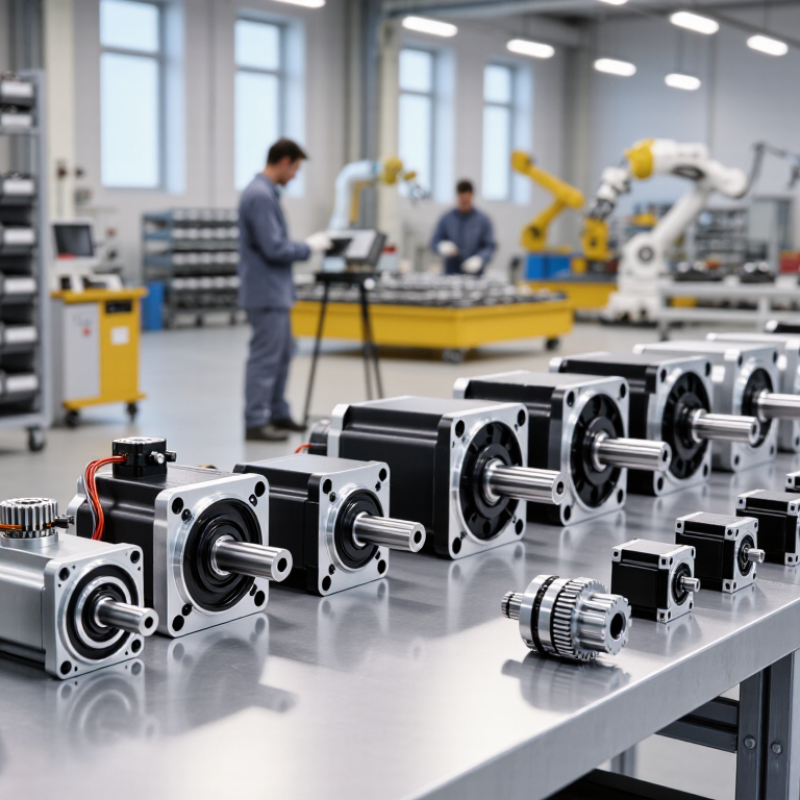
A custom gear motor combines an electric motor and a gearbox into one controlled drive unit. It converts electrical energy into slower, stronger, and more usable rotation. Engineers adapt the ratio, shaft design, mounting holes, voltage, and protection rating for a specific machine. This matters in conveyor rollers, medical beds, automated gates, and compact packaging equipment.
The U.S. Department of Energy reports that motor-driven systems consume more than half of industrial electricity in the United States. Efficient gear motor selection can therefore reduce wasted energy during repeated movement. MarketsandMarkets also projects steady growth in the global gear motor market through 2028, driven by factory automation, material handling, and energy-conscious machinery. These figures indicate demand, not guaranteed savings.
Engineers measure starting torque, running speed, duty cycle, load weight, ambient temperature, and available space.
A small conveyor may need a high-ratio gearbox, sealed bearings, and an IP-rated enclosure.
A robotic joint may require low backlash and quiet operation.
Customization is not automatically better. An oversized motor can waste energy, while an undersized gearbox may overheat after hours of cycling.
I have seen specifications fail because designers calculated average load and ignored startup resistance. That mistake is easy to repeat. Testing under actual load remains essential.
Choosing China’s top 10 custom gear motor manufacturers requires more than comparing catalog prices. The right evaluation begins with application data: torque, speed, duty cycle, mounting limits, noise, and operating temperature. A supplier should translate these requirements into drawings, tolerance tables, and test criteria. This matters because the IEA reports that electric motor-driven systems consume roughly half of global electricity. Small efficiency losses can become significant operating costs.
Ask for evidence, not promises. Review material certificates, gear-hardness results, winding data, ingress-protection tests, and endurance records from comparable projects. ISO 9001 certification supports process control, but it does not prove motor performance. Request a sample unit and inspect backlash, vibration, temperature rise, and starting current. The IEC 60034 series offers useful guidance for motor testing and rating. A polished factory tour can still mislead. I would treat undocumented claims as unverified.
Tips: Build a weighted scorecard before contacting manufacturers. Give technical conformity more weight than the lowest quotation. Check whether engineers answer detailed questions directly. Confirm spare-part availability, inspection checkpoints, packaging, and realistic lead times in writing. Review at least three sample reports and compare the same test conditions. Also calculate total ownership cost, including energy, maintenance, rejected units, and downtime. A supplier may offer a cheaper gearbox, yet use weaker bearings or inconsistent heat treatment. That risk is easy to miss during initial negotiations. Reflect on your own specification too; vague requirements can create avoidable disputes.
China’s top 10 custom gear motor manufacturers serve automation, logistics, medical equipment, and renewable energy. Their strengths differ considerably. Grand View Research estimated the global gear motor market at over USD 28 billion in 2023, with steady growth through 2030. MarketsandMarkets also identified automation and energy efficiency as major demand drivers in 2024.
The ten leading profiles reflect distinct engineering capabilities. One specializes in compact planetary drives for robots. Another builds quiet worm gear motors for access systems. A third focuses on helical units for conveyors. One develops bevel gear motors for limited installation space. Another supplies stainless-steel models for food-processing equipment. A sixth profile emphasizes brushless motor integration. The seventh serves medical devices with low-noise assemblies. An eighth produces high-torque units for solar tracking. The ninth offers rapid prototyping and CNC machining. The tenth combines testing, firmware, and customized control systems. These profiles are based on practical indicators, including torque consistency, IP protection, thermal testing, export experience, and documented quality procedures. However, “top” remains partly subjective. Price rankings alone can mislead buyers.
Tips: Request a full torque-speed curve, not only rated power. Check backlash, duty cycle, noise levels, and allowable radial loads. Ask for sample test records and traceable materials. TÜV and ISO 9001 credentials support reliability, but they do not replace application testing. A prototype may pass in a clean laboratory and fail beside dust, heat, or vibration. That detail is easy to underestimate.
An anonymized comparison of commonly reported customization capabilities and technical specifications in China’s gear motor manufacturing sector
| Profile | Primary Customization Focus | Common Gearbox Configurations | Motor Technology | Typical Ratio Range | Typical Output Torque | Common Protection Rating | Insulation Class | Efficiency Options | Quality and Compliance | Typical Applications |
|---|---|---|---|---|---|---|---|---|---|---|
| Manufacturer Profile 01 | High-volume AC gear motor customization; shaft, flange, cable, and connector variations | Helical, worm, and helical-worm | Single-phase and three-phase induction motors | Approximately 3:1–300:1 | Approximately 5–2,000 N·m | IP54–IP66 | Class F; Class H available for selected designs | IE2 and IE3; IE4 available for selected motor platforms | ISO 9001-based production; IEC 60034 design references | Conveyors, packaging equipment, agricultural machinery, material handling |
| Manufacturer Profile 02 | Compact DC and brushless DC gear motors for low-voltage equipment | Planetary, spur, and worm | Brushed DC and BLDC motors | Approximately 5:1–1,000:1 | Approximately 0.05–150 N·m | IP40–IP65 | Class B or Class F | High-efficiency permanent-magnet designs | ISO 9001-based quality systems; RoHS-compatible material options | Robotics, medical devices, access systems, small automation equipment |
| Manufacturer Profile 03 | Precision positioning and low-backlash transmission assemblies | Planetary and precision helical | Servo and brushless permanent-magnet motors | Approximately 3:1–100:1 | Approximately 1–1,500 N·m | IP54–IP65 | Class F | High-efficiency servo systems with encoder feedback | ISO 9001-based production; encoder and brake options available | AGVs, robotic arms, CNC equipment, semiconductor handling |
| Manufacturer Profile 04 | Heavy-duty geared motors for continuous-duty industrial service | Parallel-shaft, helical-bevel, and inline helical | Three-phase induction motors | Approximately 5:1–500:1 | Approximately 100–20,000 N·m | IP55–IP66 | Class F or Class H | IE3 and IE4 configurations | ISO 9001-based production; IEC 60034-1 operating references | Mining, cranes, mixers, wastewater systems, production lines |
| Manufacturer Profile 05 | Small worm gear motors with customized mounting and output interfaces | Worm, compact helical-worm, and spur | AC induction and permanent-split-capacitor motors | Approximately 7.5:1–300:1 | Approximately 2–800 N·m | IP44–IP65 | Class B or Class F | IE2 and IE3 options | ISO 9001-based quality control; CE-oriented export documentation | Valves, doors, displays, food-processing equipment, conveyors |
| Manufacturer Profile 06 | Low-noise gear motor assemblies for commercial and consumer equipment | Spur, planetary, and low-noise worm | Low-voltage DC and BLDC motors | Approximately 4:1–800:1 | Approximately 0.02–100 N·m | IP40–IP54 | Class B or Class F | Permanent-magnet high-efficiency designs | ISO 9001-based processes; RoHS and REACH material declarations available | Office automation, smart appliances, HVAC dampers, pumps, dispensers |
| Manufacturer Profile 07 | Customized planetary gear motors for high torque density | Planetary, planetary-helical, and right-angle planetary | Servo, BLDC, and DC motors | Approximately 3:1–1,000:1 | Approximately 0.5–5,000 N·m | IP54–IP67 | Class F | High-efficiency permanent-magnet motor options | ISO 9001-based production; brake, encoder, and Hall-sensor options | Mobile robots, AGVs, automation modules, lifting equipment |
| Manufacturer Profile 08 | Corrosion-resistant and washdown-oriented gear motor configurations | Helical, worm, and stainless-steel planetary | Three-phase induction and BLDC motors | Approximately 5:1–400:1 | Approximately 10–3,000 N·m | IP65–IP69K | Class F | IE3 and selected IE4 options | ISO 9001-based processes; food-contact and washdown documentation subject to configuration | Food and beverage, pharmaceutical, packaging, clean manufacturing |
| Manufacturer Profile 09 | Customized gear motors for solar tracking and outdoor automation | Worm, helical-worm, and planetary | AC induction, DC, and BLDC motors | Approximately 10:1–1,000:1 | Approximately 20–4,000 N·m | IP55–IP67 | Class F or Class H | IE2–IE4, depending on motor size and control method | ISO 9001-based production; outdoor sealing and corrosion-protection options | Solar trackers, gates, blinds, agricultural systems, outdoor machinery |
| Manufacturer Profile 10 | Integrated motor, gearbox, brake, encoder, and variable-speed drive packages | Helical, bevel-helical, planetary, and parallel-shaft | Induction and permanent-magnet motors with inverter compatibility | Approximately 3:1–600:1 | Approximately 20–15,000 N·m | IP55–IP66 | Class F or Class H | IE3 and IE4 packages; inverter-duty options available | ISO 9001-based production; IEC 60034 and EMC-related design considerations | Factory automation, logistics systems, elevators, pumps, industrial machinery |
Technical values are representative market ranges rather than universal specifications. Actual torque, ratio, efficiency, ingress protection, and compliance depend on the selected motor size, gearbox design, duty cycle, environment, and customer requirements.
China Top 10 Custom Gear Motor Manufacturers?
A strong comparison should examine capabilities, not only production scale. Custom gear motor manufacturers typically offer helical, planetary, worm, and bevel designs. These options support conveyor systems, packaging lines, robotics, pumps, and automated warehouses. Buyers should check torque ranges, speed ratios, thermal ratings, noise levels, and duty cycles. According to the U.S. Department of Energy, motor systems can represent 50% to 70% of industrial electricity use. Efficiency is therefore a purchasing issue, not a minor specification.
Customization may include shaft geometry, mounting positions, brake systems, encoders, seals, coatings, and food-grade materials. Some factories provide prototype machining, load testing, vibration checks, and batch traceability. The International Energy Agency reports that electric motor systems use roughly half of global electricity. Even small efficiency gains can reduce operating costs across thousands of running hours. However, catalog efficiency figures can be misleading. Real performance depends on load patterns, lubrication, installation, and maintenance. That detail is easy to overlook.
Tips: Request a complete test report and a sample unit. Confirm continuous torque, not only peak torque. Ask for drawings before tooling begins. Compare warranty terms, spare-part access, and response time. A factory may promise broad customization, yet lack experience with your industry. Visit the production line when possible. Review failed-test records too. They reveal practical engineering discipline better than polished brochures.
Gearbox architecture strongly influences the achievable reduction ratio, torque density, efficiency, noise level, and application suitability. The chart shows representative upper-end ratio ranges commonly specified for major gear motor designs; actual values depend on load, duty cycle, motor speed, lubrication, and manufacturer configuration.
Typical application alignment: planetary and helical designs are commonly selected for compact, efficient motion systems; worm gear motors are often used where high reduction and self-locking behavior are important; bevel and inline helical units are frequently used for efficient right-angle or in-line power transmission. These are engineering reference ranges, not company-specific performance claims.
Selecting a Chinese gear motor manufacturer requires more than comparing catalog prices. Define the application clearly: load torque, output speed, duty cycle, mounting position, voltage, noise limits, and operating temperature. A supplier that asks detailed questions shows stronger engineering discipline. One that only sends a price deserves caution.
Request a production sample and test it under realistic load. Test it loaded. Check starting torque, temperature rise, vibration, backlash, and noise after continuous operation. Review gearbox materials, winding quality, sealing design, inspection records, and traceability. Ask whether the factory performs endurance testing or only final visual checks. Details matter. A lower price may reflect efficient production, but it may also hide thinner gears or limited testing.
Visit the facility when possible, or arrange a live video audit. Observe assembly cleanliness, calibration control, warehouse storage, and how rejected parts are handled. Confirm technical drawings, tolerances, delivery capacity, packaging, warranty terms, spare parts, and response times in writing. Certifications should match your destination market and actual product configuration. Communication quality is also evidence; unclear answers can create costly delays. No checklist is perfect. Even experienced buyers can overvalue samples and underestimate long-term support. Select the manufacturer that explains risks honestly, documents changes, and can maintain consistent performance across repeated orders.
Share torque, speed, duty cycle, mounting limits, noise targets, and operating temperature. Include drawings, load details, and expected service hours. Vague requirements invite avoidable disputes.
Create a weighted scorecard before contacting suppliers. Give technical conformity more weight than the lowest quotation. Compare identical test conditions, not attractive promises.
Request material certificates, gear-hardness results, winding data, and endurance records. Also ask for ingress-protection tests and inspection checkpoints. Undocumented claims remain unverified.
Check backlash, vibration, temperature rise, and starting current. Measure noise during realistic loading. A clean test room is not the factory floor.
No. Certification can support process control, but it cannot prove application performance. Request testing from comparable projects. The certificate is only one piece.
Compact planetary designs may suit robots with limited space. Worm units can support quiet access systems. Helical designs often fit conveyor equipment.
Ask for a complete torque-speed curve, not only rated power. Confirm duty cycle, backlash, noise, and allowable radial loads. Rated power alone can hide important weaknesses.
Include energy use, maintenance, rejected units, spare parts, and downtime. A cheaper gearbox may contain weaker bearings or uneven heat treatment. The initial price can mislead.
Confirm spare-part availability, packaging, inspection stages, and realistic lead times in writing. Check whether engineers answer detailed questions directly. I would review at least three sample reports.
This article explains what a Custom Gear Motor is and why it is essential for applications that require precise speed control, reliable torque transmission, compact design, and stable operation. It outlines how customized gear motors can be adapted to different voltage requirements, gear ratios, shaft configurations, mounting methods, materials, noise limits, and working environments. The article also presents a practical framework for evaluating Chinese manufacturers, including engineering expertise, production capacity, quality management, testing procedures, communication, lead times, and after-sales support.
It then profiles ten leading types of Chinese custom gear motor manufacturers according to their product capabilities, industries served, and customization options, without focusing on brand names. Readers will learn how to compare suppliers based on technical performance, certification readiness, production consistency, sample development, pricing transparency, and long-term cooperation potential. The final section provides clear guidance for selecting the right manufacturer by matching project specifications, operating conditions, budget, delivery expectations, and service requirements with a supplier’s actual strengths.