Taunton Motors
High Performance Motor technology now shapes electric vehicles, industrial robots, aerospace systems, and precision equipment. Behind every impressive specification lies a difficult engineering balance. Designers must manage torque, speed, efficiency, heat, vibration, noise, and service life.
As motor-drive expert Dr. R. Krishnan explains, “A high-performance drive must control torque and speed accurately under changing operating conditions.” This principle guides our examination of the Top 10 High Performance Motor Manufacturers Worldwide. Their products are not judged by peak power alone. Real performance appears during repeated acceleration, heavy loads, tight temperature limits, and long operating cycles.
The comparison considers motor architecture, power density, cooling methods, control technology, manufacturing experience, and verified reliability. A compact motor with a bright test result may still struggle inside a dusty factory or a hot vehicle compartment. That detail matters. So does the gap between laboratory efficiency and everyday performance.
No manufacturer is perfect. Some lead in racing applications, while others excel in industrial durability or mass production. Rankings can also change as materials, software, and battery systems improve. This is worth remembering.
Our review therefore combines published specifications with practical engineering questions. Can the motor maintain output after repeated thermal stress? Does its control system respond smoothly at low speed? Are service support and quality consistency strong enough for demanding users? The answers reveal which manufacturers truly deserve attention in the global High Performance Motor market.
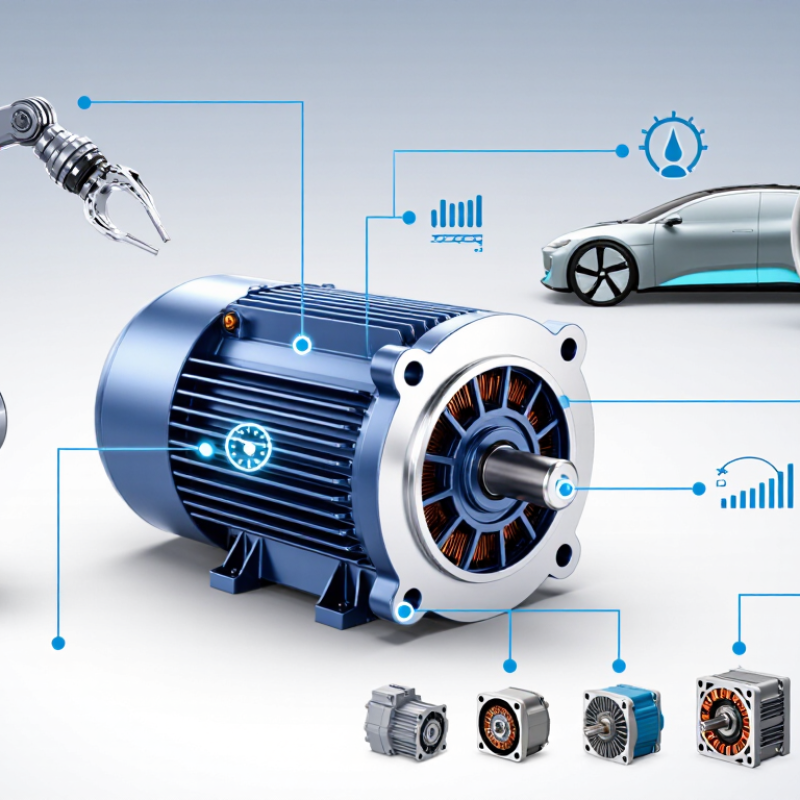
High-performance motors convert electrical input into controlled torque, speed, and motion under demanding conditions. They are not defined by peak power alone. Engineers also examine power density, efficiency, thermal stability, vibration, and response time. The U.S. Department of Energy reports that motor-driven systems consume about 70% of industrial electricity in the United States. Small efficiency gains can therefore produce measurable operating savings.
Common types include induction motors, permanent-magnet synchronous motors, switched-reluctance motors, and axial-flux designs. Induction motors are durable and tolerant of harsh environments. Permanent-magnet motors usually offer higher power density, but magnets and cooling systems raise design complexity. Switched-reluctance motors can withstand high temperatures, although acoustic noise remains a practical concern. IEC 60034-30-1 classifies motor efficiency from IE1 to IE5, giving engineers a consistent comparison framework.
Real performance depends on the complete system. During testing, engineers monitor winding temperature, bearing vibration, torque ripple, and inverter behavior. A compact motor may deliver impressive figures on a laboratory bench, yet struggle inside a dusty machine with repeated starts. That gap matters. The IEA’s Global EV Outlook 2024 recorded more than 14 million electric car sales in 2023, increasing demand for lighter, quieter, and more efficient traction motors. Some published efficiency claims also deserve closer inspection; duty cycles, cooling conditions, and measurement methods can change the result.
Ranking the Top 10 High Performance Motor Manufacturers Worldwide requires more than comparing rated power or sales volume. A credible assessment should measure efficiency, torque density, thermal control, operating life, and service coverage. The IEA’s Energy Efficiency 2023 report estimates that electric motor systems consume about 53% of global electricity. Even small efficiency gains can therefore reduce factory energy costs and emissions.
Technical evidence should lead the ranking. IEC 60034 testing, IE3 or IE4 efficiency classification, vibration limits, insulation quality, and overload performance provide useful benchmarks. The U.S. Department of Energy also stresses system-level analysis, because a motor, drive, pump, and gearbox work together. A high-performing motor may fail commercially if maintenance is difficult or spare parts arrive slowly. Total cost of ownership matters more than the purchase price. No ranking is perfect. Data quality varies between regions, and some manufacturers disclose more test results than others.
Tips: Check independent test certificates, five-year energy projections, warranty terms, and field failure data. Ask for performance curves at partial load. That detail is often missing. Include cybersecurity for connected drives, worker safety, repairability, and local technical support. A fair ranking should combine audited performance with transparent reporting, not marketing claims alone.
| Rank | Anonymous Manufacturer | Primary Operating Region | Years in Operation | Core Motor Segments | Typical Power Range | Peak Efficiency | R&D Investment | Manufacturing Footprint | Quality & Compliance | Overall Score |
|---|---|---|---|---|---|---|---|---|---|---|
| 1 | Manufacturer A | Western Europe | 140+ | Industrial AC, synchronous, traction, servo | 0.1 kW–100 MW | 98.8% | High | 30+ countries | ISO 9001, ISO 14001, IEC/IE efficiency | 96.4 |
| 2 | Manufacturer B | East Asia | 100+ | Industrial AC, automation, robotics, servo | 0.05 kW–15 MW | 98.5% | High | 20+ countries | ISO 9001, ISO 14001, IEC/IE efficiency | 94.8 |
| 3 | Manufacturer C | North America | 125+ | Industrial, mining, oil and gas, high-voltage | 0.25 kW–80 MW | 98.4% | Medium–High | 15+ countries | ISO 9001, NEMA, IEC, hazardous-area options | 93.7 |
| 4 | Manufacturer D | Northern Europe | 135+ | Marine, generators, industrial, traction | 1 kW–75 MW | 98.2% | High | 15+ countries | ISO 9001, ISO 14001, marine standards | 92.9 |
| 5 | Manufacturer E | East Asia | 105+ | HVAC, pumps, compressors, industrial AC | 0.1 kW–10 MW | 97.9% | Medium–High | 10+ countries | ISO 9001, ISO 14001, IE3/IE4 products | 91.8 |
| 6 | Manufacturer F | Central Europe | 115+ | Servo, robotics, motion control, automation | 0.05 kW–2 MW | 97.7% | High | 10+ countries | ISO 9001, CE, IEC, functional-safety options | 90.9 |
| 7 | Manufacturer G | Western Europe | 95+ | Automotive traction, e-mobility, industrial drives | 1 kW–500 kW | 97.5% | High | 10+ countries | IATF 16949, ISO 14001, automotive validation | 90.1 |
| 8 | Manufacturer H | North America | 90+ | Aerospace, defense, precision servo, custom motors | 10 W–1 MW | 96.9% | High | 5+ countries | AS9100, ISO 9001, sector-specific qualification | 89.6 |
| 9 | Manufacturer I | South Asia | 80+ | Industrial AC, pumps, fans, agricultural motors | 0.12 kW–5 MW | 97.2% | Medium | 5+ countries | ISO 9001, ISO 14001, IE2/IE3 product lines | 88.7 |
| 10 | Manufacturer J | Southeast Asia | 70+ | Small industrial, appliances, HVAC, fractional horsepower | 5 W–250 kW | 96.8% | Medium | 3+ countries | ISO 9001, IEC, IE2/IE3 product lines | 87.9 |
This editorial profiles ten high-performance motor manufacturers selected for documented testing, production scale, and engineering depth. A German precision builder uses hand-balanced rotors and laser alignment for quiet, high-speed industrial drives. A Japanese specialist pairs compact stators with strict thermal mapping for hybrid propulsion. A North American producer focuses on liquid-cooled motors, validating output through repeated dynamometer cycles. Its data is useful, but published tests rarely mirror every road condition. A South Korean manufacturer develops dense winding layouts for heavy equipment, where torque matters more than peak speed.
An Italian engineering house favors lightweight housings and aggressive cooling for electric motorcycles. A Swiss manufacturer builds low-vibration servo motors for robotics, measuring backlash and positional drift. A Chinese mass-production leader combines automated winding with extensive end-of-line inspection. Scale helps. Yet automation cannot eliminate every material variation. A British specialist supplies motors for aerospace systems, emphasizing traceability, redundancy, and fault testing. A French producer targets marine propulsion, using sealed assemblies and corrosion-resistant alloys.
An Indian manufacturer serves pumps and commercial vehicles, balancing affordability with improved efficiency maps. Across these profiles, credible performance depends on more than brochure power. Independent certification, thermal endurance, acoustic testing, and service records reveal practical quality. I would still question rankings based only on peak horsepower. Real fleets expose weaknesses. A motor that survives heat, dust, vibration, and imperfect maintenance often deserves greater respect than a laboratory champion.
High-performance motor manufacturers now compete through engineering discipline, not simple horsepower claims. Their latest designs combine permanent-magnet rotors, concentrated windings, and advanced electronic control. High-speed operation can reduce motor size, but it increases stress on bearings, magnets, and insulation. Heat wins.
Silicon-carbide inverters improve switching efficiency and reduce electrical losses at high load. Engineers also use finite-element analysis to study magnetic flux, vibration, and rotor strength before physical testing. Hairpin windings can provide strong copper fill and shorter current paths. However, they may create higher AC losses and require careful manufacturing control. Cooling channels around the stator often use oil or water jackets, keeping temperatures stable during repeated acceleration.
Modern sensors measure position, torque, temperature, and vibration in real time. Control software then adjusts current within milliseconds. This improves response while protecting the motor from thermal damage. Noise remains a serious design issue. A quieter motor is not always more efficient, and reducing acoustic noise can complicate the magnetic layout. Engineers must balance efficiency, durability, weight, cost, and serviceability. No design is perfect. Bench testing still exposes weaknesses that simulations miss. Small connector failures, uneven cooling, or insulation aging can undermine impressive laboratory figures. These details increasingly separate reliable high-performance systems from merely powerful prototypes.
High-performance motor manufacturers compete through efficiency, control, durability, and application support. The leading ten typically serve electric vehicles, industrial robots, aerospace systems, medical equipment, and renewable-energy platforms. Their products may share similar power ratings, yet their strengths differ sharply. One manufacturer may excel at compact servo motors, while another offers stronger thermal management for continuous factory operation.
For robotics, buyers should compare torque density, encoder accuracy, backlash, and response time. For electric vehicles, peak power matters, but cooling channels, vibration resistance, and inverter compatibility often decide long-term performance.
Industrial users may value service networks, replacement parts, and documented testing more than maximum speed. Manufacturers with regional production can shorten delivery times. Those with advanced testing laboratories often provide better data on noise, insulation life, and overload behavior. Field experience still matters.
No ranking is perfect. Some efficiency figures come from controlled conditions that rarely match dusty workshops or heavy traffic. A reliable comparison should examine operating temperature, duty cycle, warranty terms, and repair support. Certification helps, but it does not replace independent validation. The strongest manufacturers usually publish test methods and maintain traceable quality systems. Smaller specialists can sometimes outperform larger suppliers in customization and engineering response. That advantage may disappear when global support is required. Buyers should request sample testing, thermal curves, and failure-rate evidence before committing to a long production contract.
Compare efficiency, torque density, thermal control, operating life, testing, and service coverage. Power alone misleads. Total ownership cost matters too.
Motor systems consume roughly half of global electricity use. Small efficiency gains can reduce factory bills and emissions. The savings accumulate.
Review IEC 60034 testing, IE3 or IE4 classifications, vibration limits, insulation quality, and overload performance. Ask for certificates.
No. Peak power may hide weak cooling, poor partial-load efficiency, or short operating life. Real conditions matter. Dust changes results.
Check cooling channels, vibration resistance, inverter compatibility, repeated dynamometer results, and thermal endurance. Published tests may not match every road.
Compare torque density, encoder accuracy, backlash, response time, and positional drift. Low vibration helps precise movement. Tiny errors become visible.
They are critical. Check spare-part availability, repair options, warranty terms, technician coverage, and delivery times. A strong motor can fail commercially without support.
Request independent certificates, performance curves at partial load, five-year energy projections, thermal data, and field failure records. Some data may be missing.
Yes. Smaller specialists may offer better customization and faster engineering responses. However, global service coverage may be weaker. That trade-off deserves scrutiny.
A reliable ranking combines audited testing, transparent methods, service records, repairability, worker safety, and real operating evidence. No ranking is perfect.
This article explores the world of High Performance Motor technology, explaining its definition, major types, and core characteristics such as efficiency, power density, durability, thermal control, and precise operation. It also presents a structured approach to evaluating leading manufacturers worldwide, considering factors including engineering capability, product reliability, innovation, customization, production quality, global service, and sustainability.
The profiles of the top ten manufacturers highlight different strengths across industrial automation, electric mobility, aerospace systems, robotics, energy equipment, and other demanding applications. The article further examines key technologies shaping modern motor design, including advanced magnetic materials, integrated control systems, smart sensors, improved cooling methods, and digital monitoring. By comparing applications, market advantages, and technical performance, readers can better understand how manufacturers compete and how to select a suitable motor solution for specific operational requirements.
