 Taunton Motors
Automotive gear motors quietly control many vehicle functions, from powered seats and window lifts to door locks, tailgates, and cooling systems. Their compact housings must deliver stable torque, low noise, and dependable movement under changing temperatures. This makes supplier selection more demanding than comparing catalog prices.
This guide examines the Top 10 Automotive Gear Motor Manufacturers Worldwide through practical and verifiable criteria. These include engineering experience, production scale, motor efficiency, gearbox durability, acoustic performance, and quality-control systems. Public certifications, vehicle-program experience, testing capabilities, and global service coverage also matter. A strong manufacturer should demonstrate repeatable performance, not simply attractive specifications. Details such as sealed connectors, grease selection, backlash control, and endurance testing can reveal meaningful differences.
The ranking remains a guide, not an absolute verdict. Regional strengths, customer requirements, and product platforms can change the result. Some manufacturers publish extensive technical data, while others disclose less. That limitation deserves attention. Buyers should request samples, test reports, failure-rate information, and application references before making a final decision. In real projects, a motor that performs well on a laboratory bench may behave differently after thousands of cycles, vibration exposure, or winter starts. Field validation is essential. So is honest comparison. This overview aims to help engineers, purchasing teams, and vehicle developers identify credible partners and ask better technical questions. Performance comes first. Cost still matters. Reliability decides the relationship.
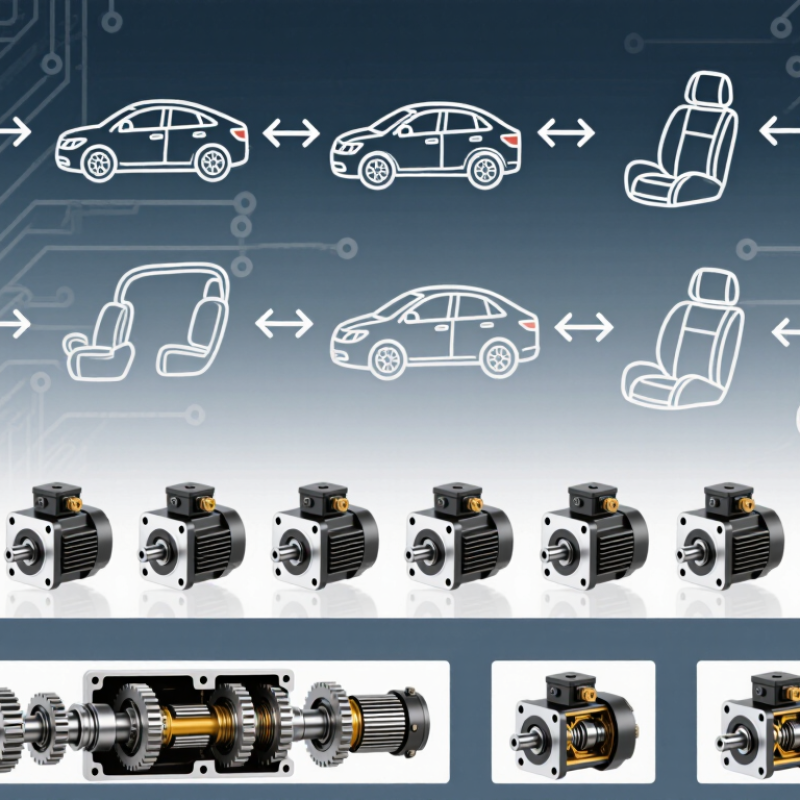
Automotive gear motors combine an electric motor with a gear train. The motor creates rotation, while the gears reduce speed and increase usable torque. They are compact, controllable, and suitable for repeated movement inside vehicles. They are not simply stronger motors. Their value comes from matching motion to a specific mechanical task.
You can find them in power windows, seat adjustment systems, door locks, sunroofs, windshield wipers, and powered tailgates. They also operate HVAC flaps, cooling fans, headlamp leveling units, and small fluid pumps. In these applications, a gear motor may move a heavy seat rail or turn a plastic flap only a few degrees. Quiet operation matters inside the cabin. Backlash matters too. Small errors become visible.
Selecting a reliable unit requires more than checking torque figures. Engineers examine voltage, duty cycle, stall behavior, operating temperature, noise, vibration, sealing, and gear durability. A motor that performs well on a test bench may struggle after thousands of cold starts. Heat changes everything. Dust and moisture can enter through overlooked interfaces. In my view, this is where manufacturer comparisons need more honesty: published efficiency rarely shows long-term wear, assembly variation, or real cabin noise. Practical validation should include loaded cycles, temperature changes, vibration exposure, and emergency stop conditions. Each result should be recorded against the vehicle’s actual mechanical resistance, not an ideal laboratory load.
| Rank | Anonymous Manufacturer Profile | Primary Production Region | Main Gear Motor Type | Typical Automotive Voltage | Typical Torque Range | Common Automotive Uses | Typical Compliance Framework |
|---|---|---|---|---|---|---|---|
| 1 | Global high-volume automotive supplier profile | Western Europe and North America | Worm, spur and planetary gear motors | 9–16 V DC; 24–48 V DC for selected systems | 0.2–80 N·m | Power windows, seat adjustment, sunroofs and door modules | IATF 16949, ISO 9001, ISO 14001 and APQP processes |
| 2 | European precision motion profile | Central and Northern Europe | Planetary and helical gear motors | 12 V DC and 24 V DC | 1–150 N·m | Electric parking brakes, active grilles and HVAC actuators | IATF 16949, ISO 26262 support and PPAP documentation |
| 3 | East Asian compact actuator profile | Japan and South Korea | Worm and spur gear motors | 9–14 V DC | 0.1–35 N·m | Mirror folding, headlamp leveling, instrument clusters and vents | IATF 16949, ISO 9001 and endurance-test validation |
| 4 | North American powertrain actuator profile | United States, Canada and Mexico | High-load planetary gear motors | 12 V DC; 24–48 V DC for hybrid platforms | 10–300 N·m | Transmission actuators, pumps, valves and thermal-management systems | IATF 16949, SAE testing practices and PPAP approval |
| 5 | Chinese integrated actuator profile | Eastern China and Southern China | Worm, spur and planetary gear motors | 12 V DC and 24 V DC | 0.5–100 N·m | Seat systems, tailgates, charging doors and body controls | IATF 16949, ISO 9001 and customer-specific validation |
| 6 | Specialized wiper and washer motor profile | Europe, Asia and Latin America | Worm gear motors with self-locking output | 12 V DC and 24 V DC | 5–70 N·m | Windshield wipers, rear wipers and washer systems | IATF 16949, ingress-protection testing and salt-spray testing |
| 7 | Electric vehicle thermal-management profile | Europe, China and Southeast Asia | Brushless DC planetary gear motors | 24–48 V DC; higher-voltage systems use dedicated designs | 2–120 N·m | Coolant pumps, refrigerant valves, fans and battery thermal systems | IATF 16949, ISO 26262 processes and EMC qualification |
| 8 | Commercial vehicle actuator profile | Germany, North America and India | Heavy-duty worm and planetary gear motors | 12 V DC and 24 V DC | 15–500 N·m | Cabin adjustment, HVAC flaps, step systems and liftgate mechanisms | IATF 16949, ISO 16750 environmental testing and PPAP |
| 9 | Power seat and comfort-system profile | North America, Europe and South Korea | Worm and helical gear motors | 12 V DC | 3–90 N·m | Seat slide, recline, lumbar support, massage and head-rest adjustment | IATF 16949, noise-vibration testing and life-cycle validation |
| 10 | Emerging smart-mobility actuator profile | Southeast Asia, India and Eastern Europe | Brushless DC, spur and compact planetary gear motors | 12 V DC, 24 V DC and 48 V DC | 0.3–60 N·m | ADAS shutters, charging connectors, robotic door systems and small electric vehicles | ISO 9001, IATF 16949 transition or certification, and EMC testing |
Note: Torque and voltage values are representative automotive design ranges and vary according to vehicle platform, gear ratio, duty cycle, temperature, packaging and customer specifications. Manufacturer identities and brand-specific data are intentionally omitted.
Share load, speed, duty cycle, voltage, temperature, and installation space. Include shaft direction and mounting limits. Clear input creates useful calculations.
Request torque curves, efficiency results, thermal limits, noise data, and backlash measurements. Ask for operating-life evidence under realistic conditions. Vague answers deserve caution.
Review assembly equipment, measurement controls, cleanliness practices, and end-of-line testing. Check whether materials and components have traceable records. Small dimensional differences can cause serious fitting problems.
Look for tests involving vibration, heat, moisture, repeated starts, and frequent cycling. Application-specific testing matters more than attractive laboratory figures. Laboratory results can mislead.
Ask whether the team can adjust gear ratios, shafts, seals, connectors, or control interfaces. The manufacturer should explain tolerances in practical language. Request production samples, not only prototype units.
No. Certifications can support credibility, but they cannot replace technical evidence. Review process controls, failure analysis, supplier management, and corrective actions. Paperwork alone proves little.
Check engineering response times, replacement support, communication, and production continuity. Confirm warranty handling, spare-part availability, and design-change notifications. Slow replies may become expensive delays.
Compare testing depth, documentation, production stability, support, and long-term reliability. A lower quote may hide testing gaps or limited capacity. Price is only one signal.
Visit when possible, and inspect testing records, measurement methods, cleanliness, and final inspection. Speak with technical workers, not only sales staff. I once trusted polished presentations too much. That judgment was incomplete.
This article explains what an Automotive Gear Motor is and how it combines an electric motor with a gear reduction system to deliver controlled torque, speed, and motion. It highlights common applications in vehicle systems such as seat adjustment, window lifting, door locking, mirror positioning, ventilation, pumps, actuators, and other precision mechanisms. The discussion also introduces practical criteria for evaluating global manufacturers, including engineering capability, product reliability, manufacturing consistency, testing standards, customization support, production capacity, delivery performance, and after-sales service.
The overview compares ten leading categories of Automotive Gear Motor manufacturers worldwide without focusing on brand names. It examines key technologies and product strengths, including compact designs, low noise, energy efficiency, thermal stability, durable gear structures, intelligent control compatibility, and advanced quality management. Finally, the article provides a practical framework for selecting the right supplier by matching motor performance, installation requirements, operating conditions, certification needs, target cost, and long-term cooperation expectations with the specific demands of an automotive project.
